


Tachyonrad
 Tachyonrad
RF Awareness & Security
Security teams watch cameras, fences and networks, but a lot of what matters happens in the radio spectrum: a GPS jammer in a parked car, a contraband phone switching on inside a secure facility, a drone loitering over a perimeter, the same vehicle returning night after night.
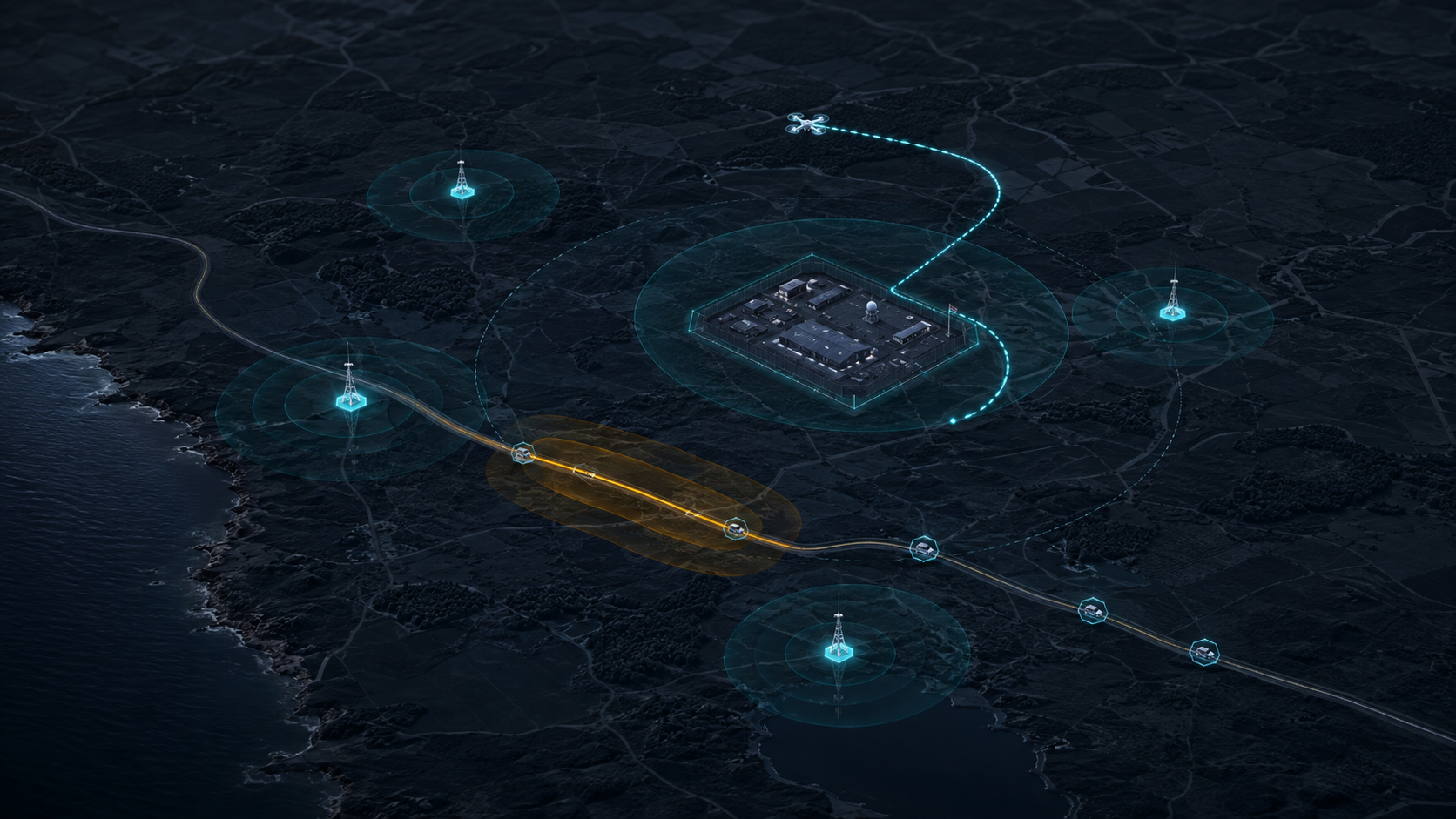
Tachyonrad, a UK developer of RF detection technology, works where physical and digital security meet. Its RadCore dashboard runs in the control room, while JDAS sensors deployed around a site, in vehicles or with teams in the field feed it what they detect, giving security teams one view of what is happening and what needs attention. The systems are built for law enforcement, security, critical national infrastructure, the public sector and intelligence customers.
- RadCore: the central dashboard for monitoring and analysis
- JDAS: the sensors that detect activity in the field
RadCore Central Monitoring
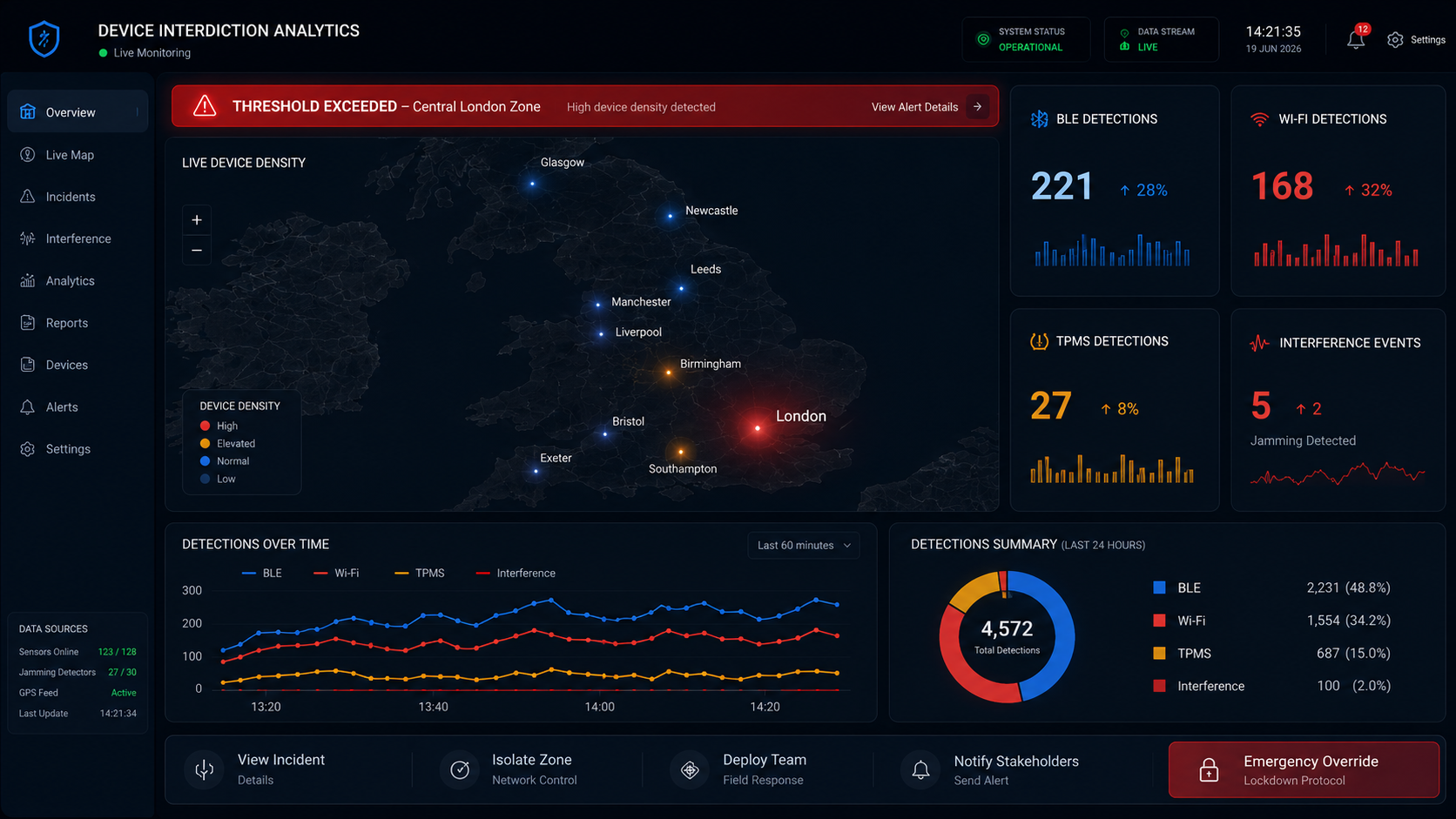
RadCore is the dashboard at the centre of the Tachyonrad system. It typically sits in a facility’s control room or security operations centre, and every JDAS sensor in the deployment reports into it, whether it is mounted around the perimeter, fitted in a vehicle or carried by a team in the field. Operators watch and analyse everything those sensors detect on one live, map-based interface, rather than checking each device separately.
From RadCore, teams can see what was detected, where and when, whether anyone has acknowledged it, and whether it has happened before.
- One live view of every JDAS sensor in the deployment
- Device registration, remote configuration and health monitoring
- Alerts with acknowledgement and time-stamped event history
- Spotting repeat activity across sensors, sites and time
- Structured reporting for briefings and investigations
Operational Views
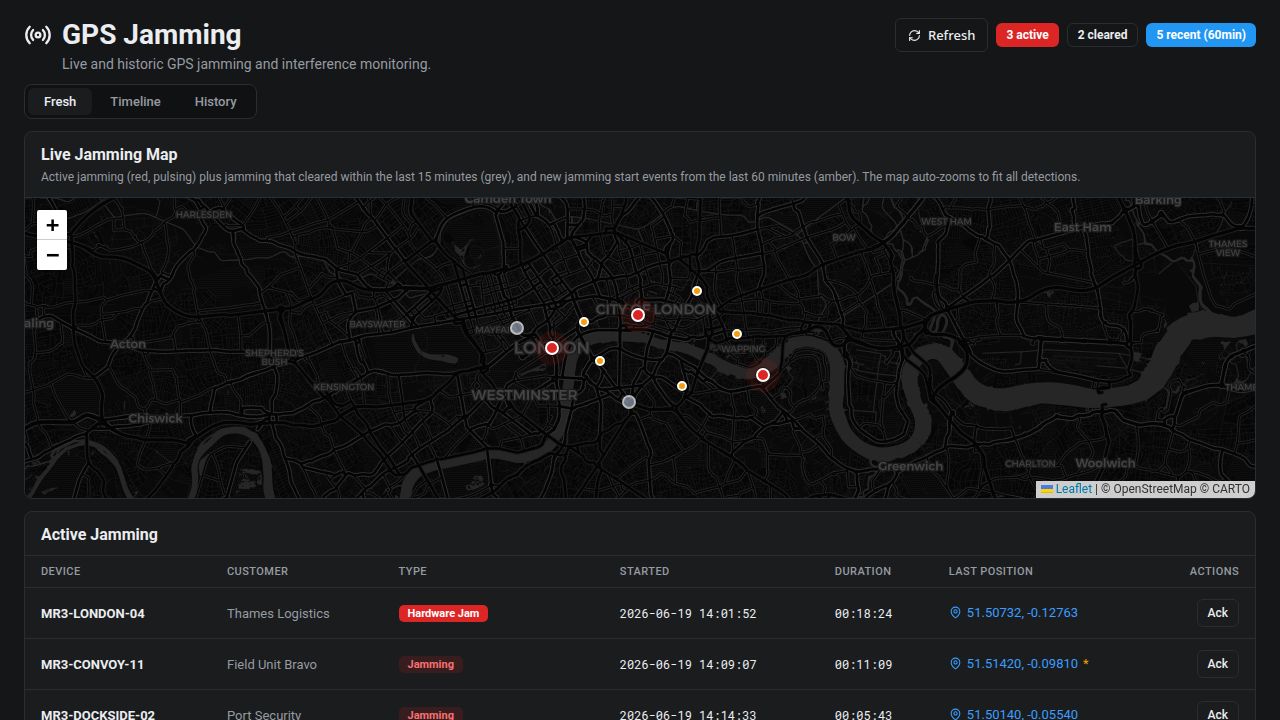
RadCore organises incoming JDAS detections into map-based views built around the questions a control room actually asks.
- Device activity: Wi-Fi, Bluetooth and vehicle activity by checkpoint and zone
- GPS interference: live and historical maps of affected zones and routes, with onset and recovery points
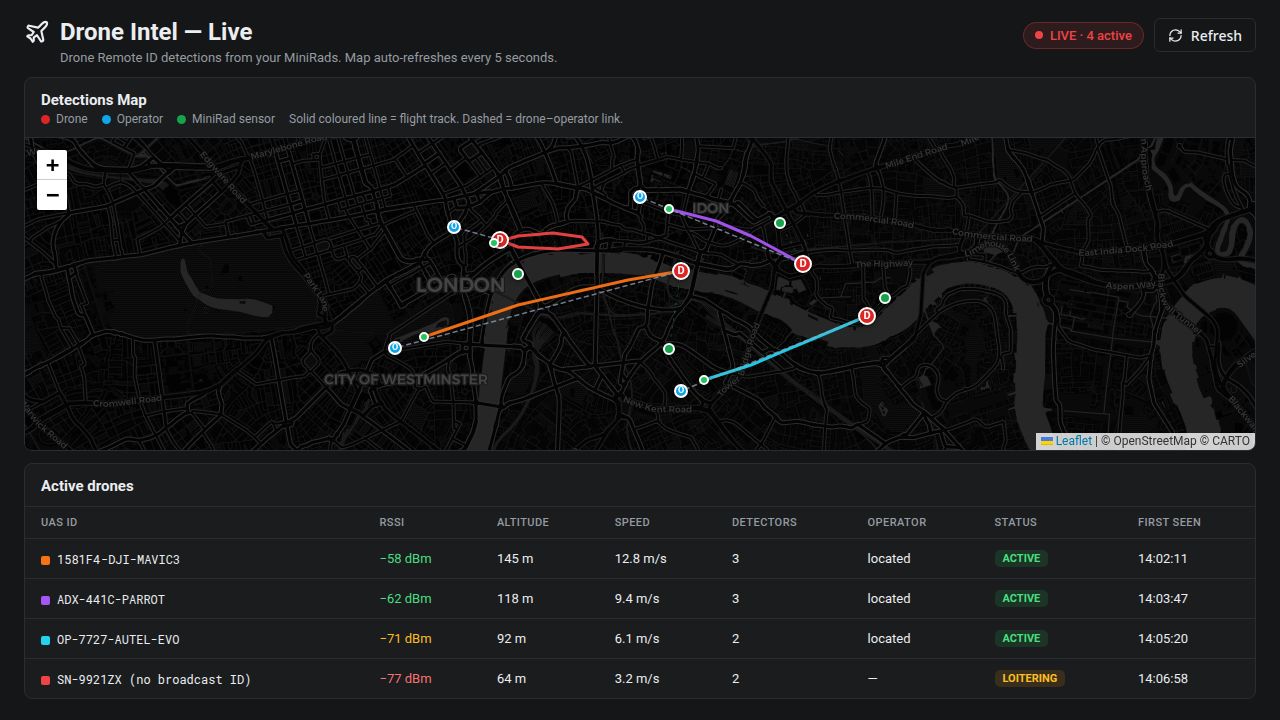
- Drone intel: Remote ID flight tracks and reported take-off locations
The JDAS Family
Every JDAS model uses the same detection approach in a different form factor, from a permanent fixed installation to a handheld unit. Networked models report their detections back to RadCore in the control room, so every sensor in a deployment shows up on the same dashboard. Standalone models such as JDAS-1 and JDAS-2 keep working where there is no network connection.
JDAS Field Detection
Every JDAS sensor listens to the RF environment around people, vehicles and sites. The sensors are fully passive: they receive only, never transmit, and do not jam, block or read the content of communications. Each unit learns what normal activity looks like for its location, then highlights what is new, unusual or recurring, and reports it back to RadCore.
Depending on the model, JDAS can detect:
- Signs of GNSS/GPS jamming and interference
- Unexpected Wi-Fi and Bluetooth devices, including tracker broadcasts
- Drone Remote ID broadcasts from compliant aircraft
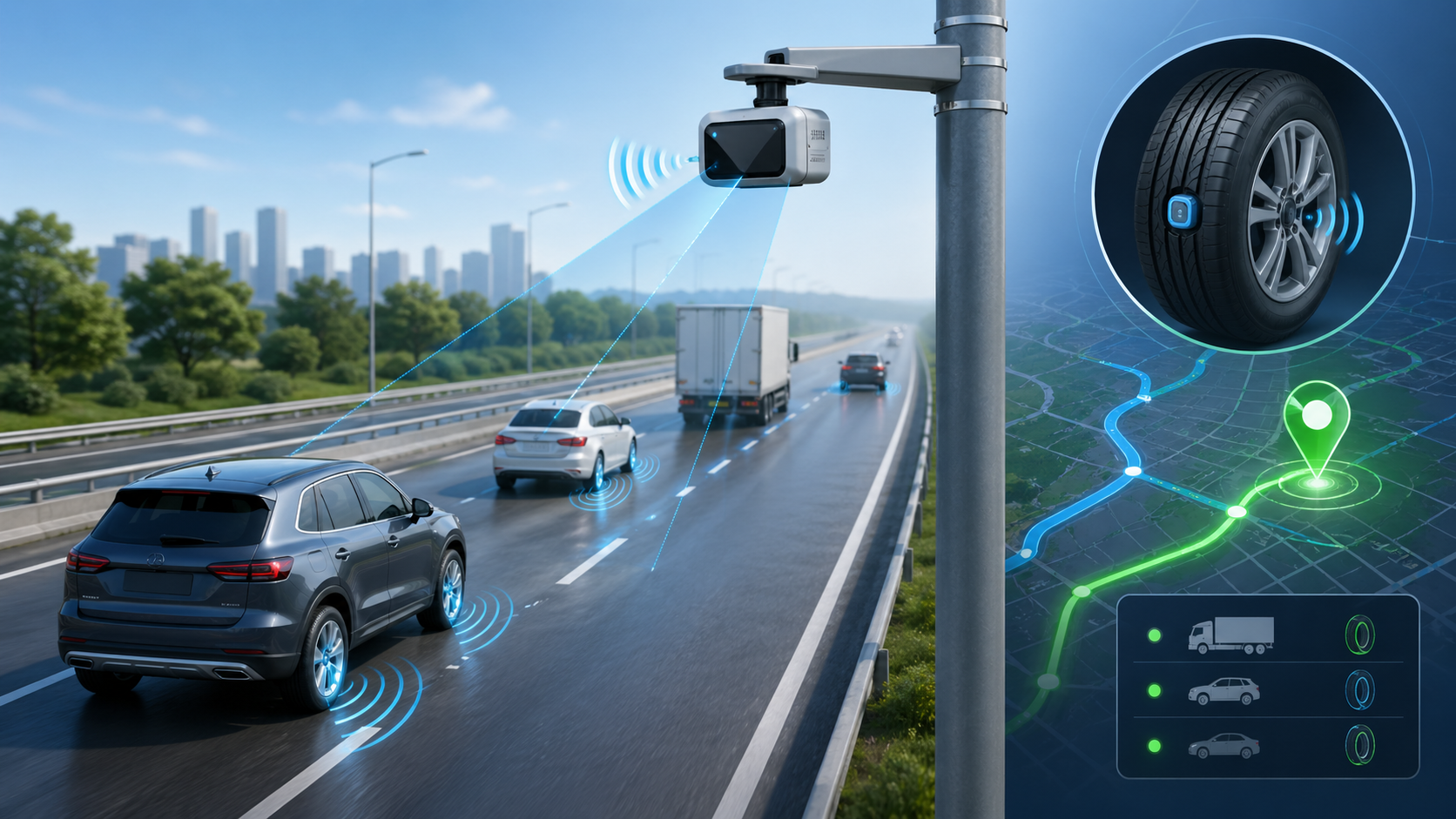
- Vehicle presence through tyre-pressure (TPMS) broadcasts

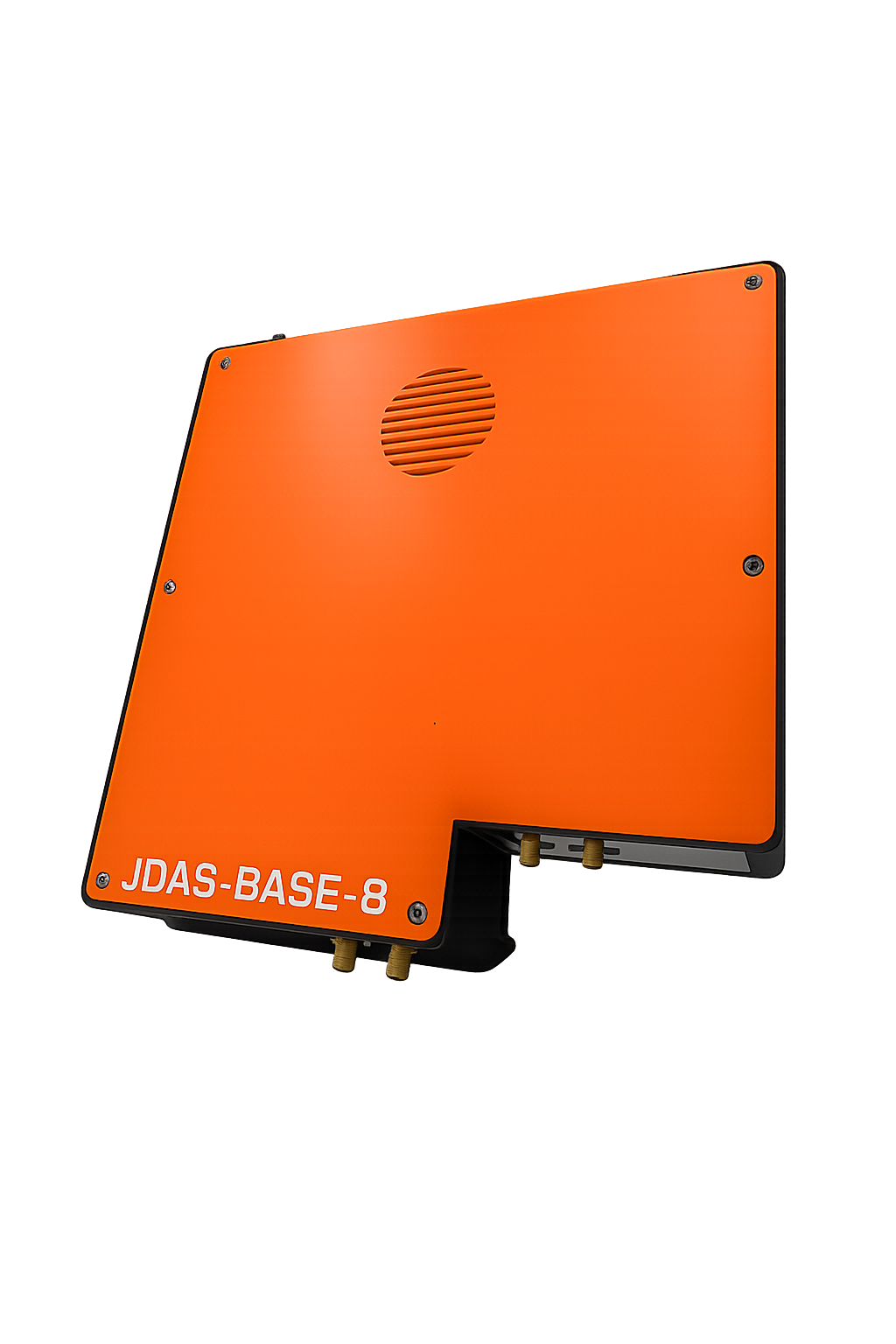
JDAS-BASE
The flagship of the range, designed for continuous monitoring from a fixed site or a vehicle. JDAS-BASE covers the widest set of detection domains in the family and is the only model that detects vehicles from their TPMS broadcasts.
- Wi-Fi and Bluetooth device detection
- GNSS/GPS interference indicators
- Drone Remote ID monitoring
- Vehicle presence and recurrence through TPMS
- Suited to perimeters, depots, secure facilities and vehicle deployments
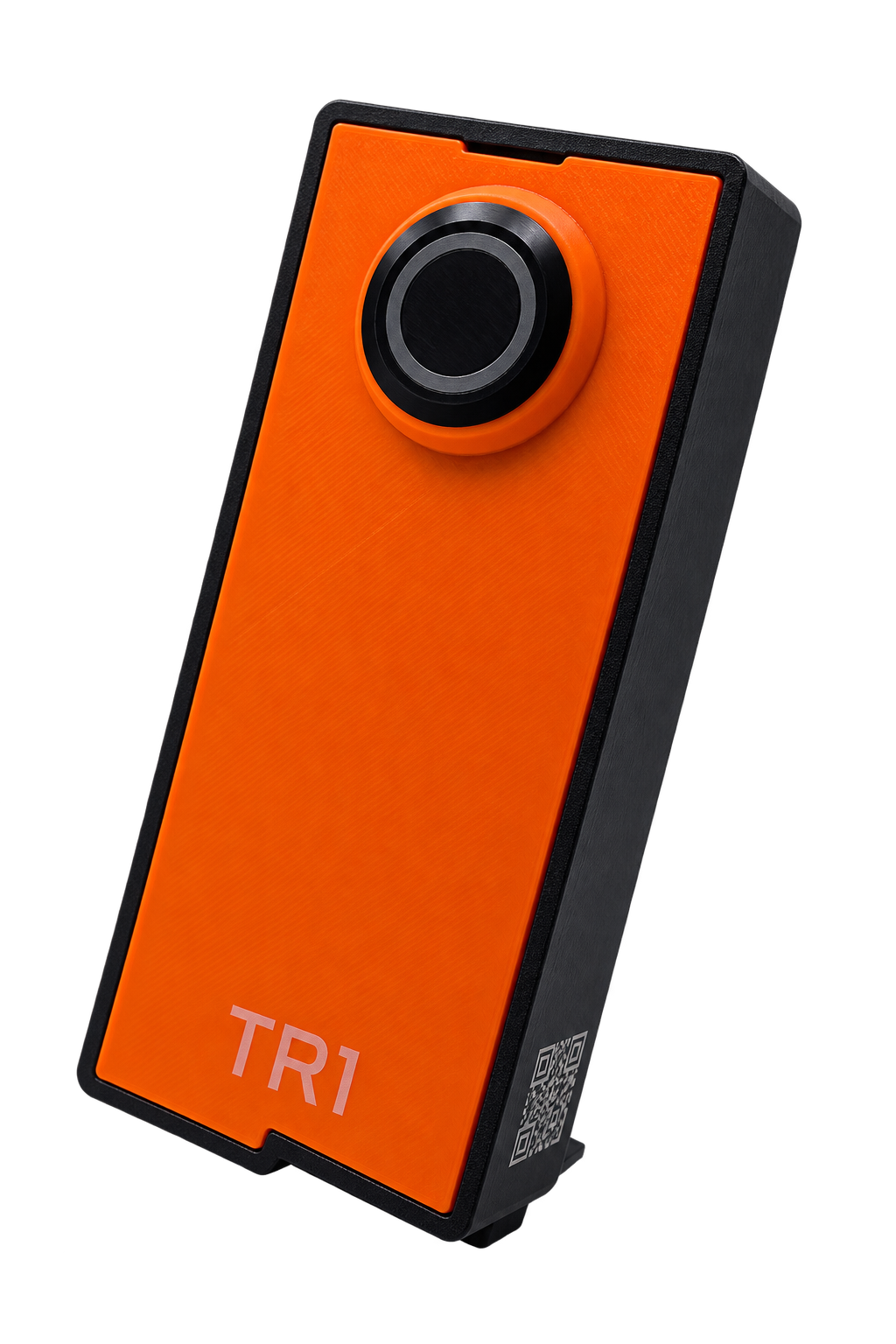
TR1
A portable sensor built around personal and travel security. TR1 gives a travelling team or a protected individual awareness of nearby wireless activity, drones and GPS interference, plus a built-in panic button to raise an alert.
- Wi-Fi and Bluetooth device detection
- Drone Remote ID awareness
- GNSS/GPS interference monitoring
- Panic button function
- Suited to executive protection and staff travelling to higher-risk locations
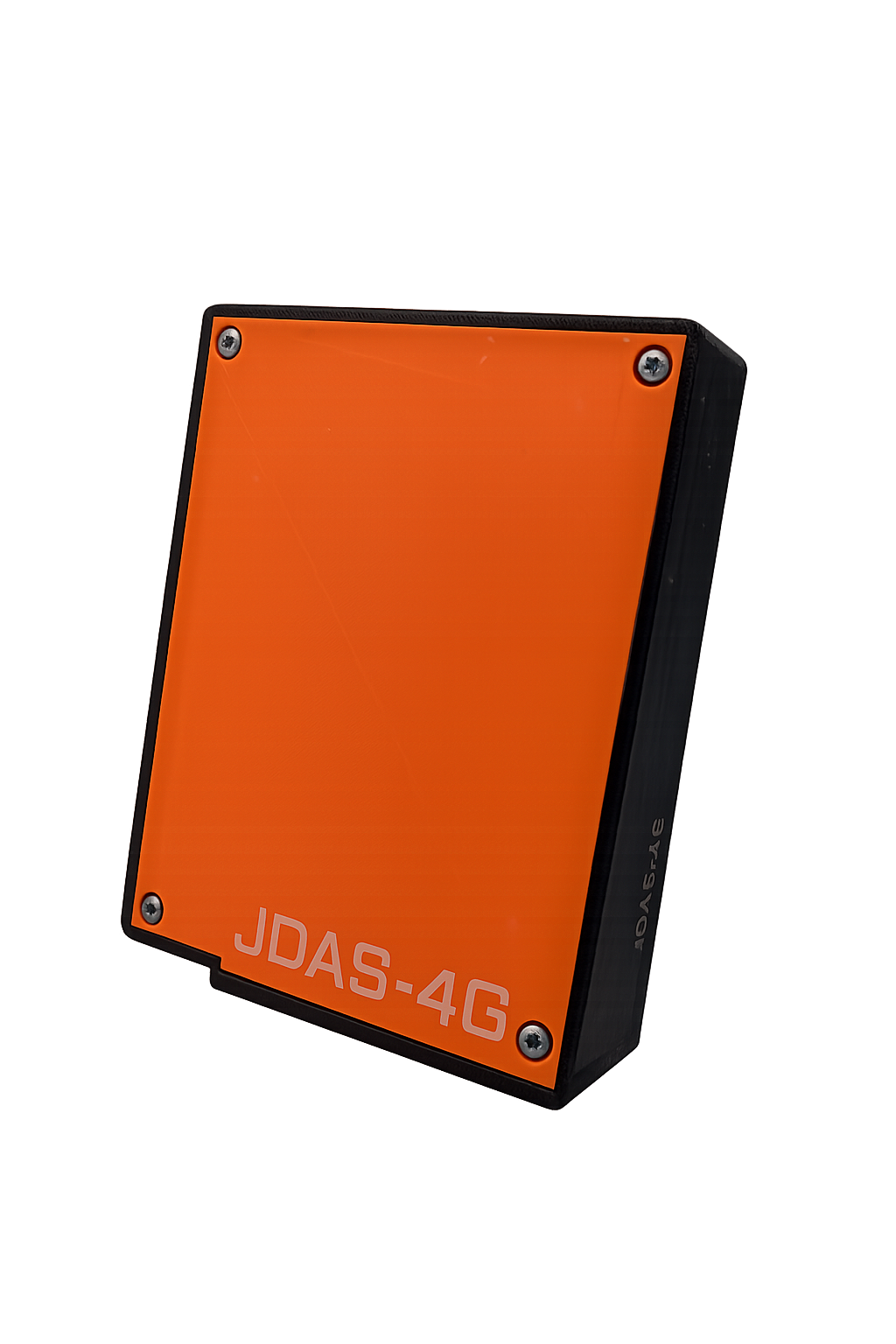
JDAS-4G
The general-purpose portable sensor in the range. It is small enough to carry in a hand or pocket on foot patrols, searches and quick surveys, and it reports its detections back to RadCore.
- Wi-Fi and Bluetooth device detection
- Drone Remote ID awareness
- GNSS/GPS interference monitoring
- Status LEDs with haptic or audible warnings
- Suited to patrols, search teams and temporary deployments
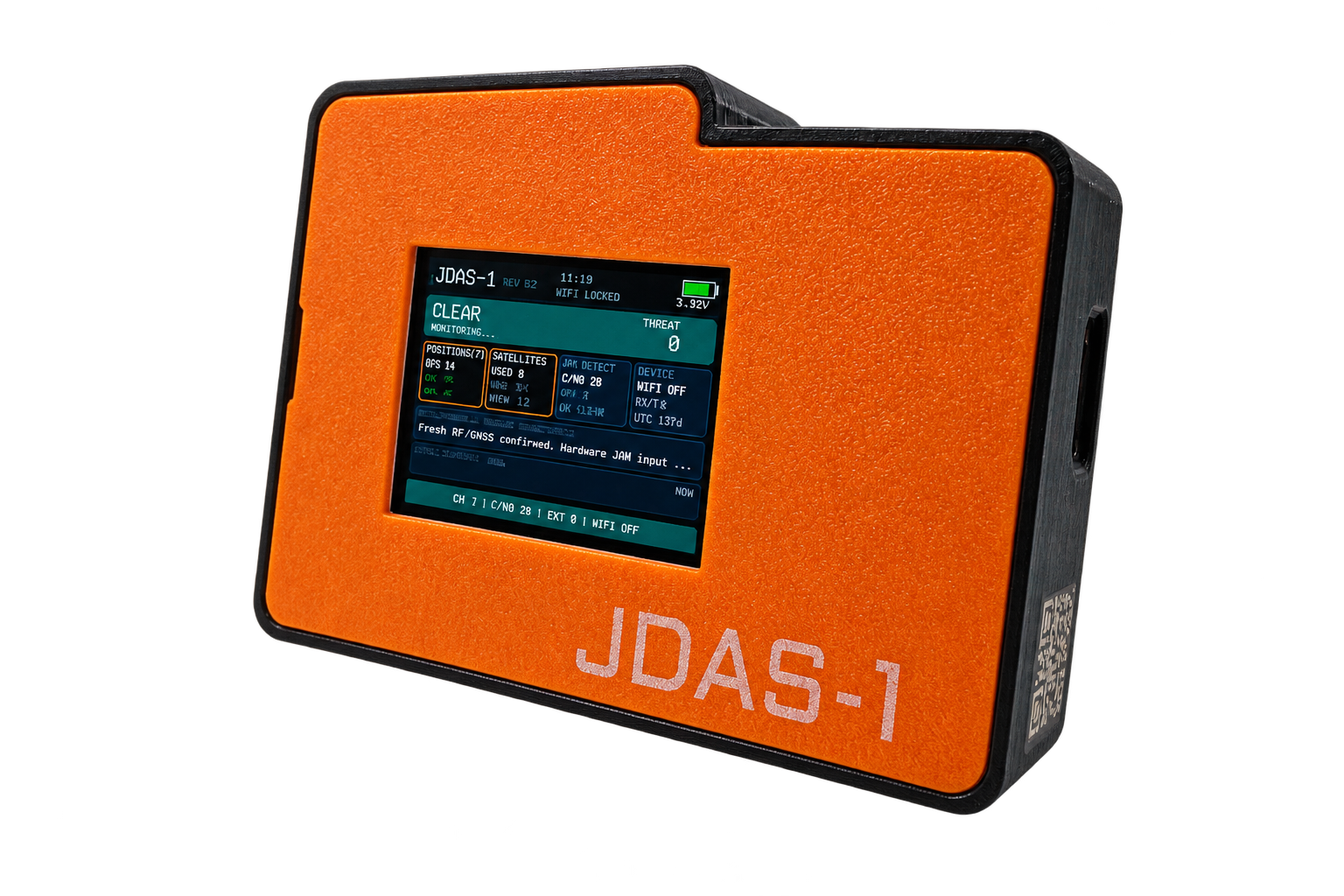
JDAS-1
A compact, portable unit dedicated to detecting GPS interference. JDAS-1 works on its own and keeps logging in places with no cellular coverage, so jamming events are still recorded where other tools would lose their connection.
- GNSS/GPS interference detection
- Independent operation without a network link
- Suited to vehicles, cargo, remote sites and cellular-denied areas
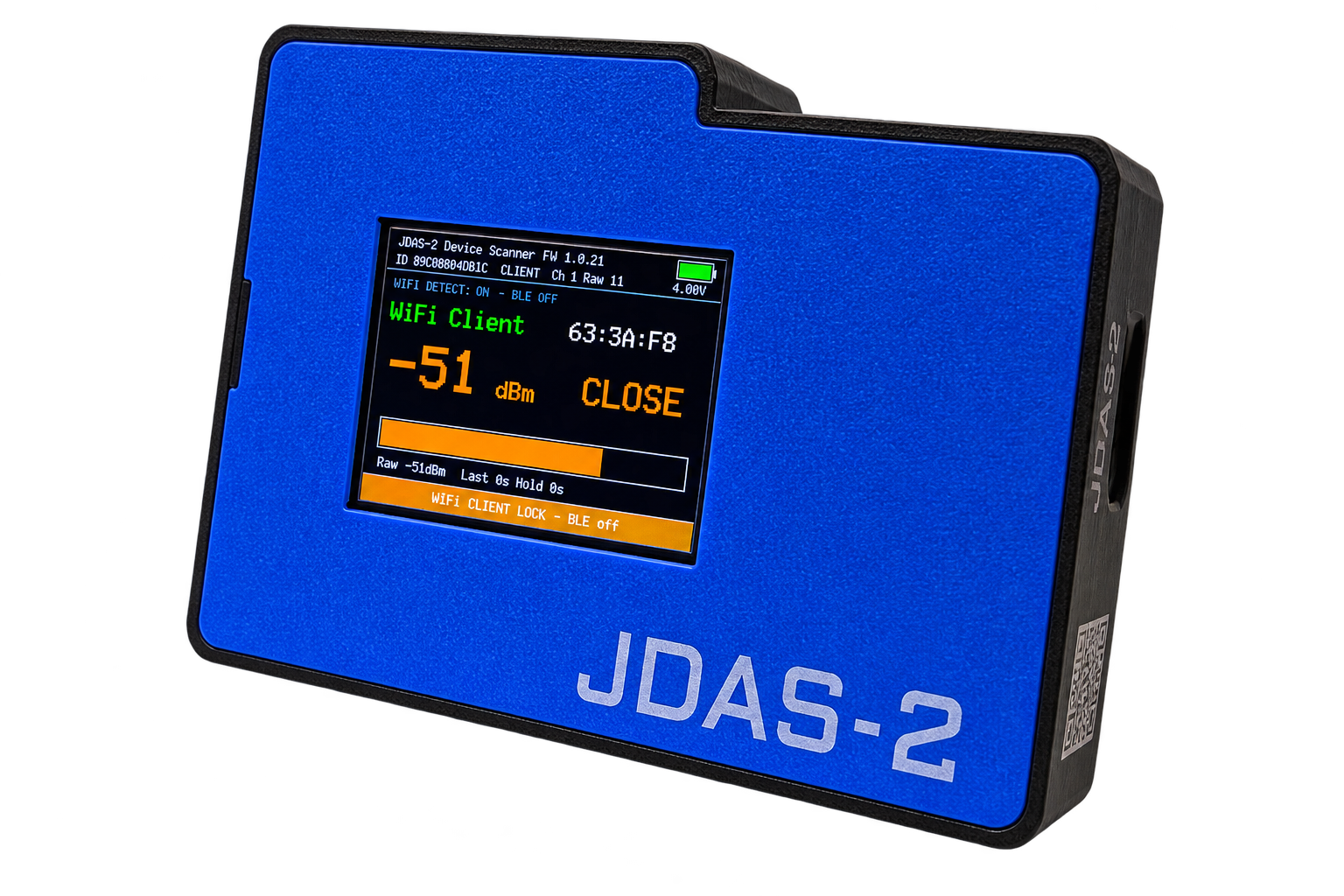
JDAS-2
A handheld survey tool with its own display, designed for checking the Wi-Fi and Bluetooth activity in a room, vehicle or area on the spot. It needs no backhaul, so it works in cellular-denied locations.
- Local Wi-Fi and Bluetooth surveys
- Integrated display for on-the-spot results
- Standalone operation without backhaul
- Suited to secure-area sweeps and pre-meeting checks
Deployment Options
All JDAS models feed the same evidence model, so detections from different form factors can be reviewed together in RadCore.
- Hand or pocket: battery-powered units for foot patrols, search teams and quick surveys
- Vehicle mounted: powered from the vehicle, in marked or unmarked cars, with a covert LED-only mode
- Fixed asset: mounted on a pole camera, an ANPR site, a depot, a firearms base or the side of a building for continuous monitoring and alerting

Capabilities & Applications
What JDAS and RadCore detect, and the environments where security teams put them to work.
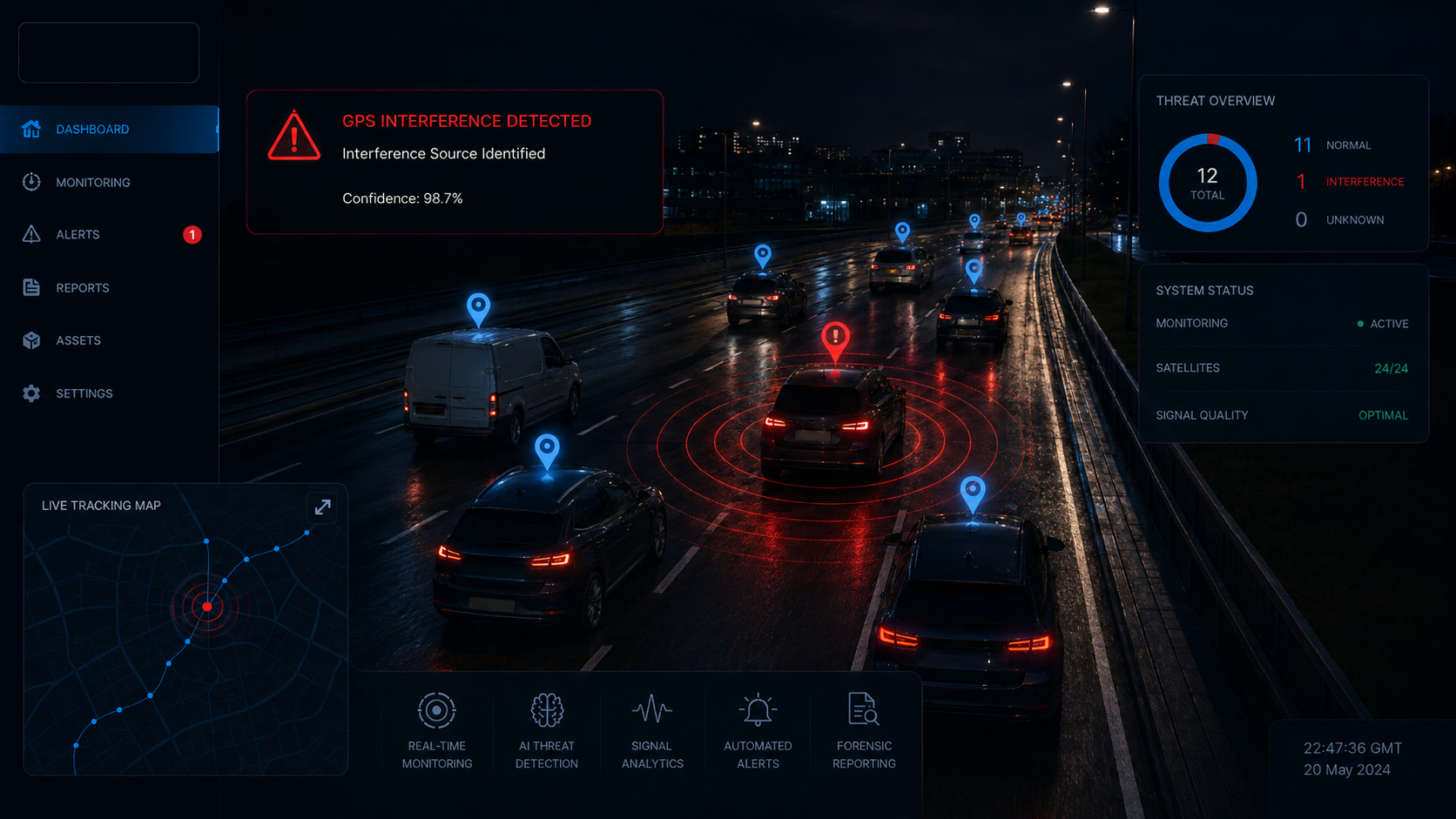
GNSS/GPS Jamming Detection
Cheap GPS jammers can quietly knock out vehicle tracking, telematics, timing systems and lone-worker devices all at once. JDAS spots the signs of interference and records the gap: where the last good position was, when the interference began and where the signal came back. RadCore then maps affected routes and sites, so investigators work from a documented timeline rather than a lost asset.
- Fleet, logistics and high-value cargo operators
- Police and surveillance teams that depend on positioning
- Critical infrastructure that relies on GPS timing
- Executive protection teams moving principals by road
Wireless Device Interdiction
Phones, trackers and other wireless devices can get past physical security controls without ever being seen. JDAS learns the normal device population for a location, event or route, then flags devices that are new, on a watch list or appearing in unusual numbers. Directional search capability helps teams narrow down where a device is physically located.
- Contraband phone detection in prisons and secure facilities
- Protecting boardrooms, R&D areas and secure zones
- Security cordons and public-order boundaries
- Finding covert trackers on shipments and vehicles
Drone Awareness
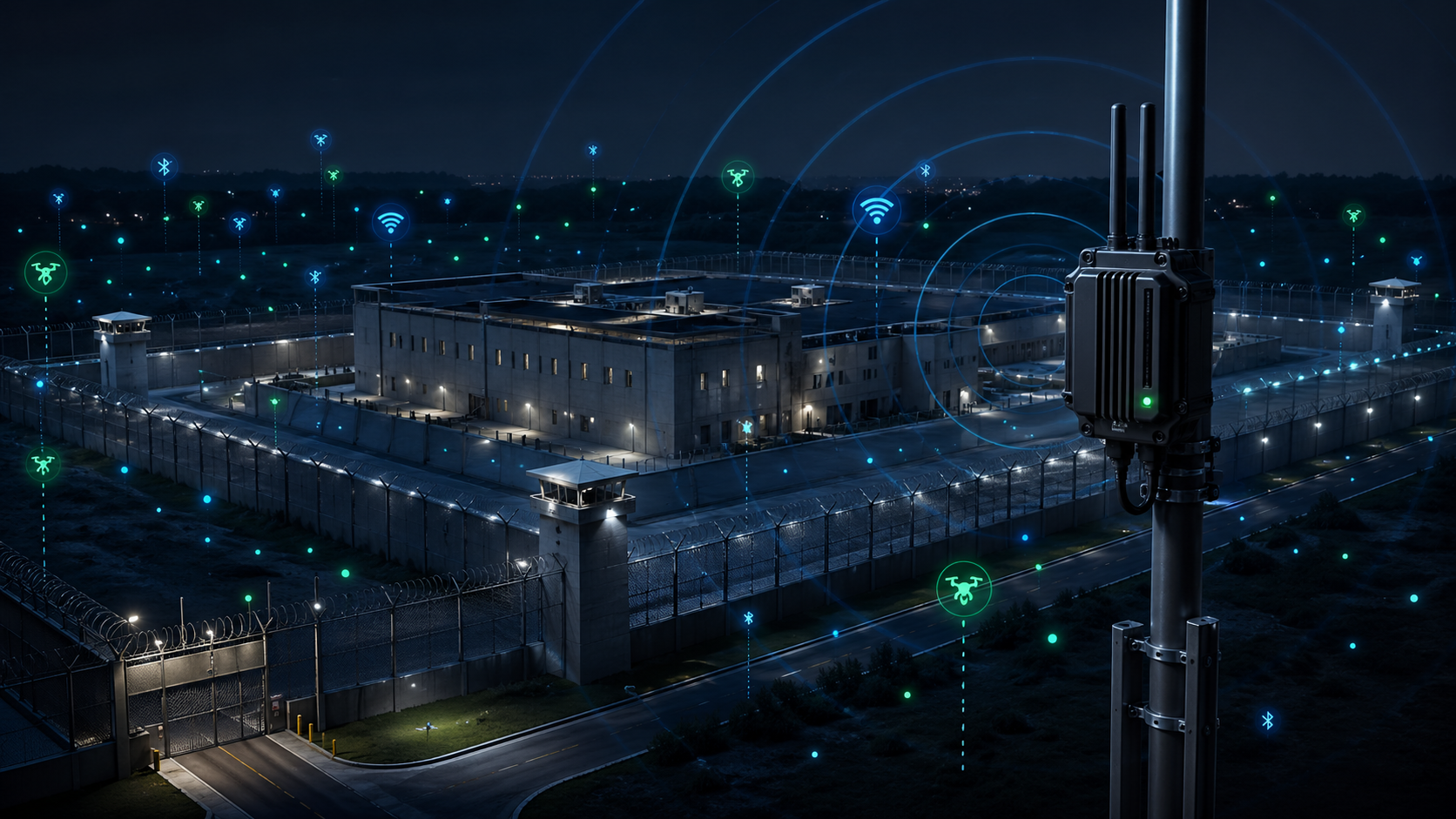
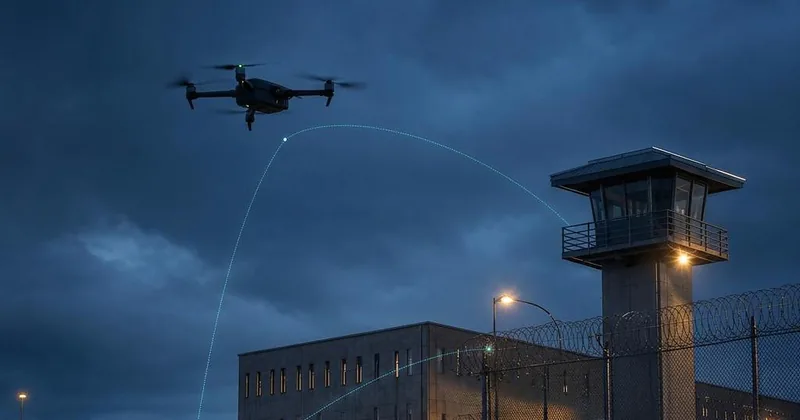
Many compliant drones broadcast Remote ID, which works much like a digital licence plate. JDAS picks up these broadcasts around protected sites and events. RadCore plots the aircraft and, where the broadcast includes it, the reported control-station or take-off location, and keeps a time-stamped history so that repeat visits show up as a pattern.
- Prisons facing contraband drops by drone
- Energy, water, transport and communications sites
- Stadiums, events and venues
- Corporate campuses and executive residences
Vehicle Intelligence
Most modern vehicles constantly broadcast tyre-pressure (TPMS) signals that carry a sensor identifier. JDAS-BASE picks these up passively, giving an indication that a vehicle is present or keeps coming back. It does this without cameras, line of sight, good lighting or a readable number plate. Cross-referencing with Wi-Fi and Bluetooth activity can bring recurring patterns to the surface.
- Spotting repeated drive-pasts and hostile reconnaissance
- Perimeter security at depots, data centres and critical sites
- Monitoring routes and residences for executive protection
- Detecting staged or following vehicles around cargo
Where It’s Used
- Prisons and secure facilities
- Critical national infrastructure, including energy, water, transport, ports, telecoms and data centres
- Police, public safety and public-order operations
- Events, stadiums and venues
- Fleet, logistics and high-value cargo
- Executive protection and secure travel
- Government, diplomatic and corporate secure sites
JDAS adds a layer to existing security rather than replacing it. Its detections are indicators to be checked against CCTV, access records, patrol reports and other sources. They do not identify individuals or prove intent on their own.
Teel Technologies represents and resells Tachyonrad products. If you would like more information about JDAS, RadCore, deployment options, or pricing, please contact our team. We will be happy to provide details and help determine the right solution for your operational requirements.